
Matter, Motion, and Life
The Blazing WorldThis flow traces the book's argument that nature is an active material continuum rather than a collection of inert ingredients.
increasing Bearing strength in each event
 decreasing
Bearing strength in each eventdecreasingA Search for Principles
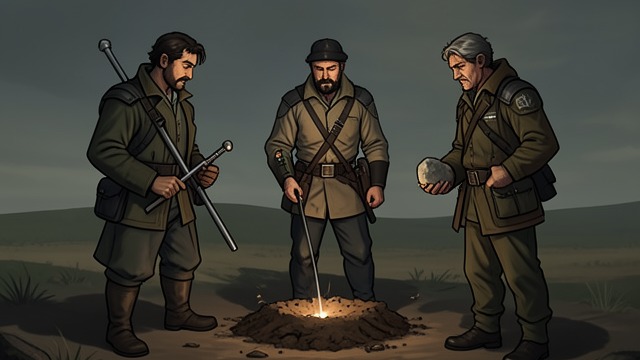
A Search for Principles
Rival Foundations
Ape-men disagree over whether natural bodies originate in elements, salt-sulfur-mercury, or water.
Reduction Questioned
Their dispute exposes the difficulty of finding a single simple substance behind nature's immense variety.
The Empress's Matter
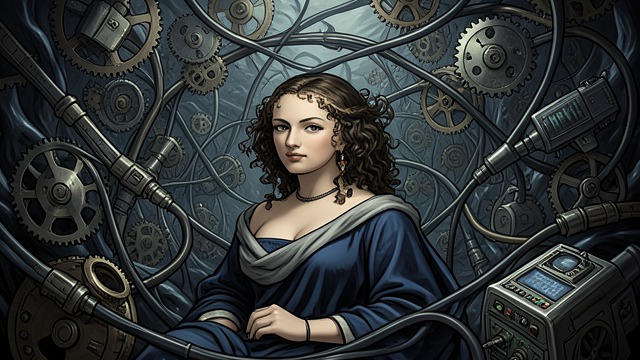
The Empress's Matter
One Active Nature
The Empress argues that nature is one infinite body, divided and recombined by its own motion.
A Rejected Reduction
Fire and chemical preparations may produce effects, but they cannot reveal a final set of universal ingredients.
Life Without Blood
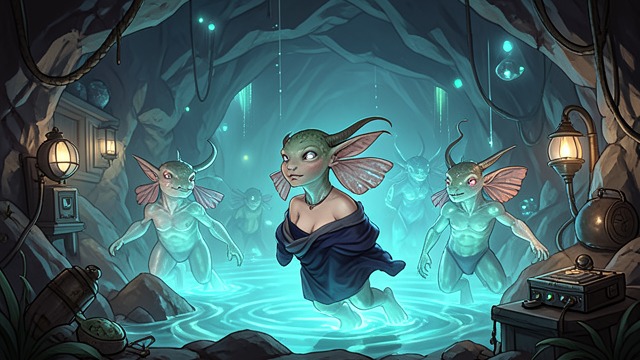
Life Without Blood
Diverse Living Forms
Fish-men and Worm-men describe creatures that live without blood and use different forms of respiration.
Life Reconsidered
Their reports challenge the assumption that familiar human physiology defines life in every species.
Nature's Internal Art
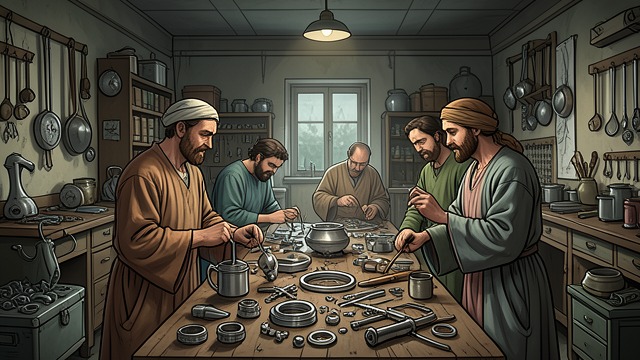
Nature's Internal Art
Parts Assist Parts
Worm-men explain production as the cooperation and transformation of material parts rather than creation from nothing.
Continuity Through Change
Particular forms alter, yet nature remains an integrated process of motion and composition.
Mind as Material Creation
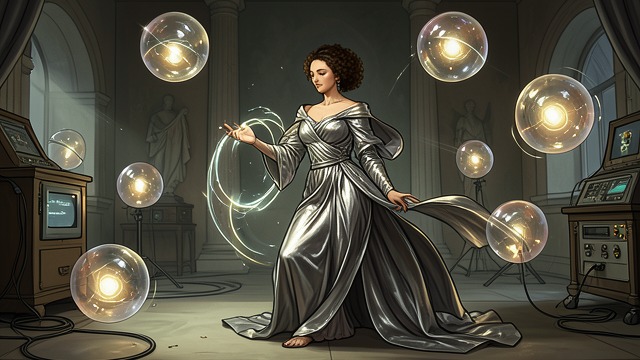
Mind as Material Creation
Creative Motion
The Duchess builds her world from rational, self-moving matter, treating thought as a productive force rather than an immaterial escape from nature.
A Unified Vision
The account joins mental invention to the book's larger view of an active material world.
During the Ape-men's chemical debate
At the end of the chemical debate
During the inquiries into animals
During the discussion of underground life
During the Duchess's successful world-making
